

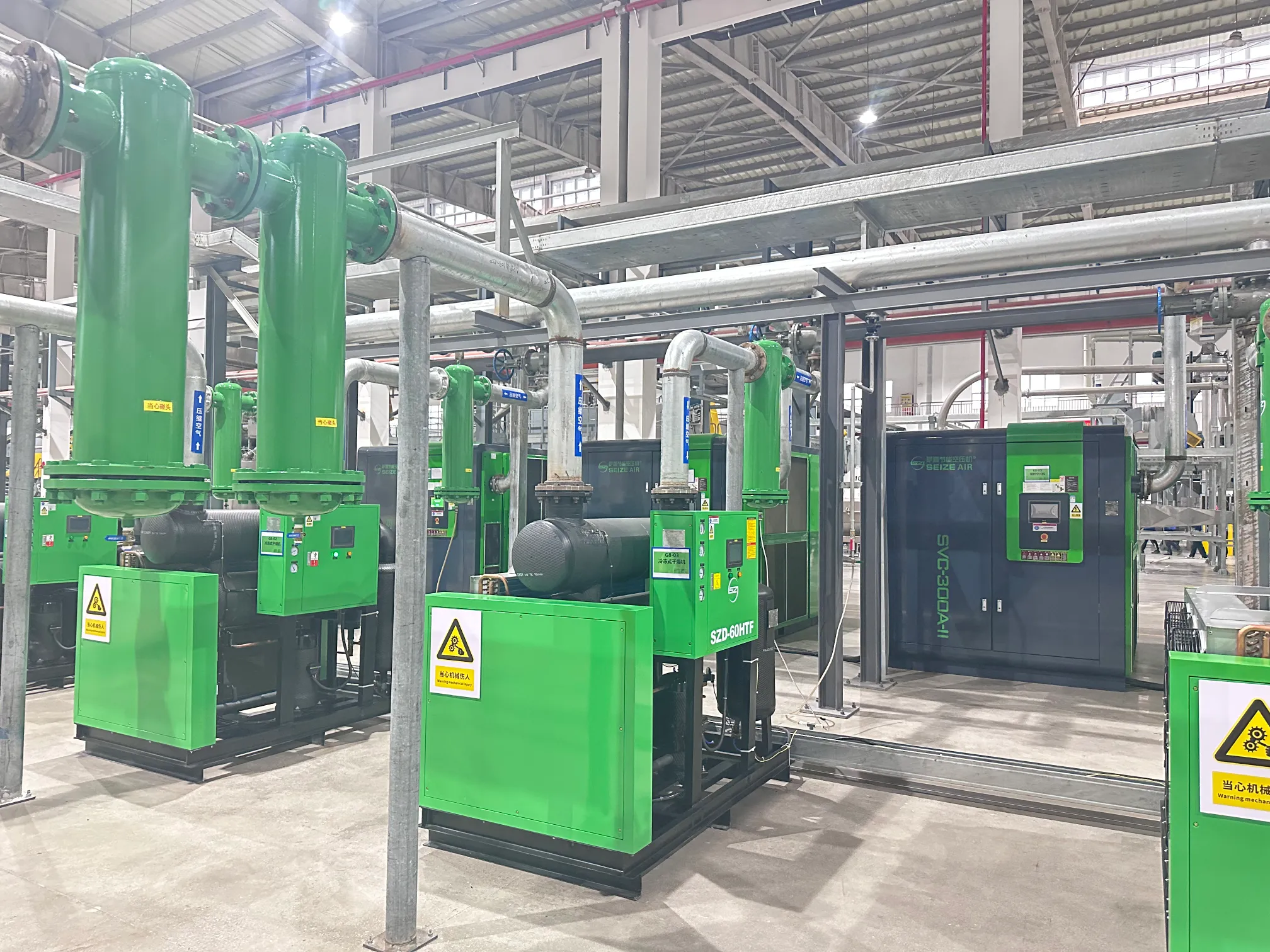
The Problem: High Energy Consumption in Traditional Air Compressors
Air compressors are critical for powering pneumatic tools, machinery, and automation systems in manufacturing. However, conventional compressors often operate at full capacity even during low-demand periods, leading to unnecessary energy waste. Studies show that compressed air systems account for 20–40% of a factory’s total energy consumption, making them a prime target for efficiency improvements.
Common inefficiencies include:
- Inadequate pressure regulation: Over-pressurization wastes energy.
- Continuous running: Compressors operate at peak power even when demand is low.
- Leakages: Undetected air leaks can increase energy use by up to 30%.
- Outdated technology: Older models lack smart features like variable speed drives (VSDs) or energy recovery systems.
How Energy-Efficient Air Compressors Save Electricity
Modern energy-efficient air compressors integrate advanced technologies to optimize energy use:
1. Variable Speed Drive (VSD) Technology
VSD compressors adjust their output based on real-time demand. Instead of running at full capacity continuously, they modulate motor speed to match airflow requirements, reducing energy waste by up to 35%.
2. High-Efficiency Motors and Bearings
Premium motors with improved power factor and low-friction bearings minimize energy loss during operation. Some models achieve IE4 (Super Premium Efficiency) ratings, ensuring minimal power consumption.
3. Smart Monitoring and Control Systems
Integrated sensors and IoT-enabled controls allow factories to monitor pressure, temperature, and airflow in real time. These systems automatically optimize settings, detect leaks, and shut down compressors during idle periods.
4. Heat Recovery Systems
Many energy-efficient compressors recover waste heat generated during compression. This heat can be redirected for space heating, water heating, or other processes, further reducing energy costs.
Case Study: A Factory’s Journey to Energy Savings
A mid-sized automotive parts manufacturer in China upgraded its compressor system with a VSD-enabled energy-efficient model. Within six months, the factory observed:
- 32% reduction in electricity costs for compressed air systems.
- Payback period of 2.5 years on the initial investment.
- 20% decrease in maintenance costs due to reduced wear and tear.
The factory also reduced its carbon footprint by 48 tons of CO₂ annually, aligning with sustainability goals.
Cost-Benefit Analysis: Why the Investment Pays Off
While energy-efficient compressors may have a higher upfront cost, their long-term savings are substantial:
- Energy savings: 20–40% reduction in electricity bills.
- Lower maintenance: Advanced designs require fewer repairs.
- Faster ROI: Most systems recoup costs within 2–5 years, depending on usage.
- Government incentives: Many regions offer tax rebates or subsidies for energy-efficient equipment.
Conclusion: A Sustainable Investment for Factories
Adopting energy-efficient air compressors is a strategic move for factories seeking to reduce costs, improve efficiency, and meet environmental standards. By leveraging technologies like VSDs, smart controls, and heat recovery, businesses can transform their compressed air systems into cost-saving assets. With rising energy prices and stricter emissions regulations, upgrading to energy-efficient compressors is no longer optional—it’s a necessity for competitive manufacturing.
? Phone: +86-15021218862
? Email: sales@seize-air.com


