

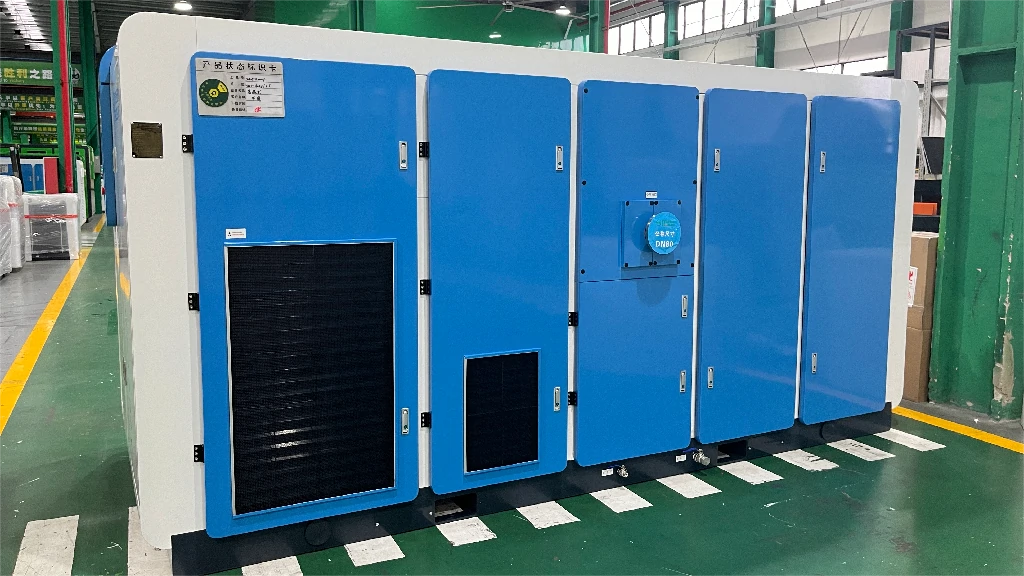
Piston Air Compressors: Common Drawbacks
Piston compressors, also known as reciprocating compressors, use pistons and valves to compress air. While they are cost-effective for small-scale applications, they come with several limitations:
-
High Noise Levels
Piston compressors generate significant noise due to the rapid movement of pistons and valves. This can create an uncomfortable or unsafe working environment, especially in enclosed spaces. -
Frequent Maintenance
The mechanical components (pistons, valves, and seals) wear out quickly under continuous use. Regular inspections, lubrication, and part replacements are required, increasing downtime and maintenance costs. -
Lower Efficiency
Piston compressors typically operate at lower energy efficiency compared to screw compressors. Their intermittent cycling (start-stop operation) leads to energy waste and higher electricity bills. -
Limited Scalability
Piston compressors are better suited for small to medium applications. Scaling up to larger demands often requires multiple units, complicating system management and increasing costs. -
Shorter Lifespan
Due to their mechanical complexity and frequent wear, piston compressors have a shorter lifespan (around 10,000–20,000 hours), whereas screw compressors can last twice as long.
Screw Air Compressors: Key Advantages
Screw compressors, also called rotary screw compressors, use two meshing rotors to compress air continuously. Their design addresses many of the drawbacks of piston compressors, making them ideal for heavy-duty and industrial use:
-
Quieter Operation
Screw compressors operate at significantly lower noise levels (typically 70–85 dB) due to their smooth, continuous rotation. This reduces environmental impact and improves workplace safety. -
Low Maintenance Requirements
With fewer moving parts and no valves or pistons, screw compressors require less frequent maintenance. Their oil-cooled rotors and durable seals also reduce wear and tear, minimizing downtime. -
Higher Energy Efficiency
Screw compressors run at near-constant speeds, optimizing energy use and reducing waste. Many models achieve energy savings of 30% or more compared to piston compressors, lowering operational costs. -
Continuous Performance
The rotary design allows screw compressors to deliver steady airflow without cycling on and off. This consistency is critical for applications like manufacturing, automotive, and food processing. -
Longer Lifespan
Screw compressors typically last 20,000–40,000 hours with proper maintenance, making them a cost-effective long-term investment. -
Scalability
Screw compressors are available in a wide range of sizes, from small units for workshops to large industrial systems, ensuring flexibility for growing operations. -
Lower Overall Cost of Ownership
While screw compressors have a higher upfront cost, their energy efficiency, durability, and reduced maintenance lead to lower total cost of ownership over time.
Key Comparison: Piston vs. Screw Air Compressors
| Feature | Piston Compressors | Screw Compressors |
|---|---|---|
| Noise Level | High (85–110 dB) | Low (70–85 dB) |
| Maintenance | Frequent and labor-intensive | Minimal and predictable |
| Efficiency | Lower (intermittent cycling) | Higher (continuous operation) |
| Lifespan | 10,000–20,000 hours | 20,000–40,000 hours |
| Scalability | Limited to small/medium applications | Suitable for large-scale industries |
| Initial Cost | Lower | Higher |
| Total Cost of Ownership | Higher over time | Lower over time |
When to Choose a Screw Air Compressor?
Screw compressors are ideal for:
- Heavy-duty industrial applications (e.g., manufacturing, automotive, construction).
- Continuous operation (24/7 or high-demand environments).
- Noise-sensitive environments (e.g., hospitals, offices, or residential areas).
- Energy-conscious businesses aiming to reduce utility bills and carbon footprint.
Conclusion
While piston compressors remain viable for small-scale or intermittent use, screw compressors offer superior performance, efficiency, and longevity for most industrial and commercial needs. Their lower noise levels, reduced maintenance, and energy savings make them a smarter long-term investment.
If you’re upgrading your air compression system, consider the total cost of ownership and long-term benefits. Screw compressors not only enhance productivity but also align with modern sustainability goals.
Ready to switch to a screw compressor? Contact our experts to discuss your requirements and explore energy-efficient solutions tailored to your business!
? Phone: +86-15021218862
? Email: sales@seize-air.com


