

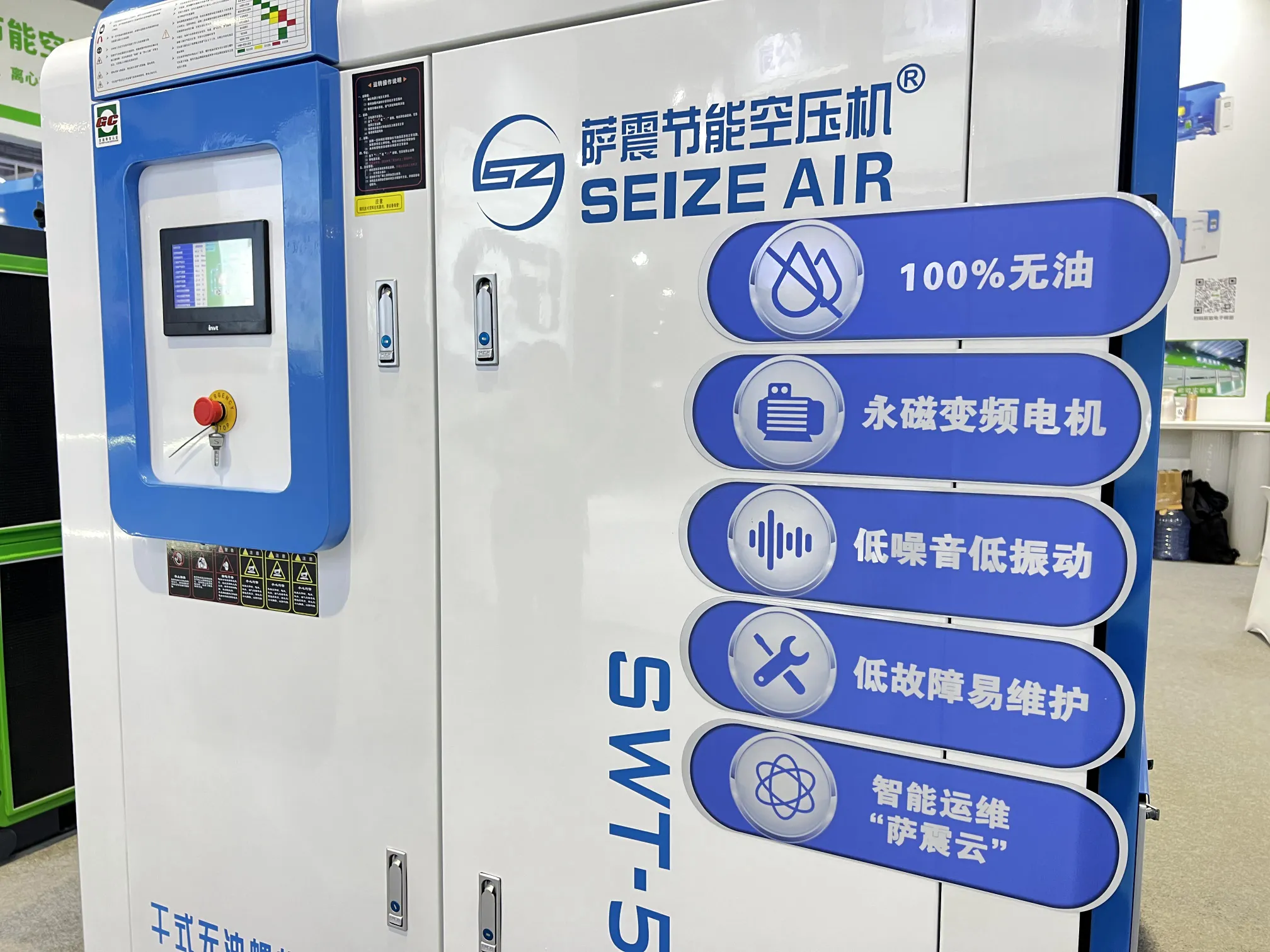
Introduction to Oil-Free Screw Compressor Technologies
Oil-free screw compressors are critical for industries requiring 100% contaminant-free air, such as food processing, pharmaceuticals, and electronics. Two dominant technologies dominate this space: dry oil-free screw compressors and water-injected (water-lubricated) oil-free screw compressors. This guide breaks down their pros, cons, and optimal use cases to help you choose the right system.
Dry Oil-Free Screw Compressors: How They Work
Dry oil-free screw compressors operate without lubricants in the compression chamber. Instead, they use precisely engineered rotors with advanced coatings (e.g., PTFE) and tight tolerances to minimize friction.
Advantages of Dry Oil-Free Compressors
- Zero Water Consumption
- No water injection or treatment systems required, reducing operational complexity.
- Lower Maintenance Costs
- Fewer components (no water filtration, pumps, or separators) mean reduced servicing needs.
- Wide Temperature Range
- Operate efficiently in cold environments where water injection could freeze.
- Compact Design
- Ideal for space-constrained facilities.
Disadvantages of Dry Oil-Free Compressors
- Higher Initial Cost
- Precision-coated rotors and specialized materials increase upfront investment.
- Heat Management Challenges
- Requires robust cooling systems to handle high discharge temperatures.
- Noise Levels
- Typically louder than water-injected models due to metal-on-metal rotor contact.
Best For: Industries prioritizing minimal maintenance, water conservation, and cold-climate operations.
Water-Injected Oil-Free Screw Compressors: How They Work
Water-injected compressors use water as a lubricant and coolant during compression. The water seals gaps between rotors, absorbs heat, and is later separated and recycled.
Advantages of Water-Injected Compressors
- Superior Heat Dissipation
- Water’s high thermal capacity ensures stable temperatures, prolonging component life.
- Quieter Operation
- Water acts as a sound dampener, reducing noise by up to 10 dB(A) vs. dry models.
- Lower Discharge Temperatures
- Prevents overheating risks in high-duty cycles.
- Cost-Effective for High Loads
- Often more durable in 24/7 industrial applications.
Disadvantages of Water-Injected Compressors
- Water Treatment Requirements
- Requires filtration systems to prevent scaling and bacterial growth.
- Higher Maintenance
- Regular cleaning of water circuits and replacement of filters add to operational costs.
- Environmental Limitations
- Not suitable for sub-zero environments without antifreeze additives.
Best For: High-duty applications like plastics manufacturing, wastewater treatment, and processes needing consistent cooling.
Side-by-Side Comparison: Dry vs. Water-Injected
| Factor | Dry Oil-Free Compressors | Water-Injected Compressors |
|---|---|---|
| Initial Cost | Higher | Lower |
| Operating Costs | Lower (no water treatment) | Higher (water/power for circulation) |
| Noise Levels | 70–85 dB(A) | 60–75 dB(A) |
| Maintenance Frequency | Every 8,000–10,000 hours | Every 4,000–6,000 hours |
| Lifespan | 15–20 years (with proper cooling) | 10–15 years (depends on water quality) |
| ISO 8573-1 Certification | Class 0 (oil-free) guaranteed | Class 0, but water vapor may require drying |
How to Choose Between Dry and Water-Injected Compressors
Consider these factors:
- Application Needs: Does your process require ultra-low noise or extreme temperatures?
- Budget: Are you prioritizing upfront savings (water-injected) or long-term maintenance costs (dry)?
- Environmental Conditions: Will freezing temperatures or water scarcity affect operations?
Conclusion: Which Oil-Free Compressor Wins?
Dry oil-free screw compressors excel in water-sensitive and cold environments, while water-injected models offer quieter, cooler operation for heavy-duty applications. Always consult with a compressed air specialist to match your facility’s needs with the right technology.
? Phone: +86-15021218862
? Email: sales@seize-air.com


