

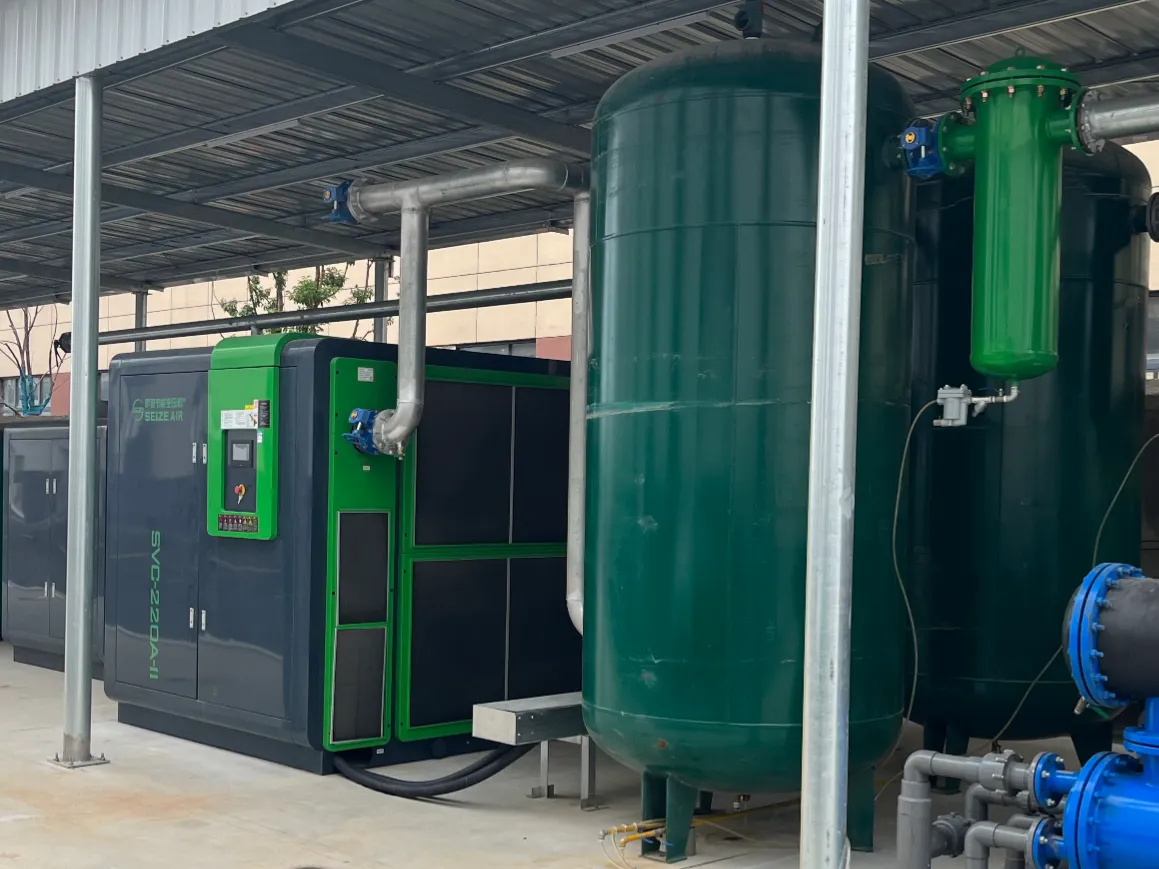
What Are Variable Frequency Air Compressors?
A variable frequency drive (VFD) air compressor uses an inverter to adjust motor speed in real-time, matching the compressor’s output to the system’s demand. This technology ensures consistent air pressure while optimizing energy consumption.
What Are Fixed Speed Air Compressors?
A fixed speed (constant speed) air compressor runs at a constant motor speed, regardless of demand. It cycles on and off to maintain pressure, which can lead to energy inefficiencies and pressure fluctuations.
Key Differences Between VFD and Fixed Speed Air Compressors
| Feature | Variable Frequency (VFD) | Fixed Speed (Constant Speed) |
|---|---|---|
| Motor Speed Control | Adjustable (varies with demand) | Fixed (constant RPM) |
| Energy Efficiency | High (saves 30–50% energy) | Lower (inefficient during partial loads) |
| Pressure Stability | Consistent pressure output | Fluctuates between cycles |
| Noise Level | Lower (smooth operation) | Higher (frequent cycling and startup noise) |
| Initial Cost | Higher upfront investment | Lower upfront cost |
| Maintenance | More complex (requires expertise) | Simpler and less frequent |
| Best For | Variable demand applications, energy-sensitive industries | Steady demand, cost-sensitive applications |
Advantages of Variable Frequency (VFD) Air Compressors
-
Energy Efficiency
VFD compressors adjust output to match real-time demand, reducing energy waste. They can save up to 30–50% on electricity costs compared to fixed-speed models, making them ideal for facilities with fluctuating air requirements. -
Pressure Stability
The inverter ensures consistent air pressure, minimizing pressure drops and improving process reliability. This is critical for applications like manufacturing, where inconsistent pressure can damage tools or products. -
Reduced Wear and Tear
By avoiding frequent on/off cycles, VFD compressors experience less mechanical stress, leading to longer lifespan and lower maintenance costs over time. -
Lower Noise Levels
Smooth motor operation and reduced cycling result in quieter environments, which is beneficial for workplaces with noise regulations. -
Scalability
VFD compressors can easily adapt to changing demands, making them suitable for growing businesses or seasonal operations.
Disadvantages of Variable Frequency Air Compressors
-
Higher Initial Cost
VFD compressors are typically 20–40% more expensive upfront due to advanced inverter technology and complex components. -
Complex Maintenance
The inverter and control systems require specialized technicians for repairs, increasing maintenance costs. -
Risk of Overload
If not properly sized, VFD compressors may struggle to handle sudden high-demand spikes, leading to performance issues.
Advantages of Fixed Speed Air Compressors
-
Lower Upfront Cost
Fixed-speed models are generally cheaper to purchase, making them a budget-friendly option for small businesses or low-demand applications. -
Simpler Design
Fewer components mean easier installation and maintenance. They often require minimal technical expertise to operate and repair. -
Robust Performance
Fixed-speed compressors deliver full power instantly, ideal for steady, high-demand tasks like heavy-duty manufacturing or construction. -
Long Lifespan
With fewer moving parts and simpler mechanics, they can last decades with proper maintenance.
Disadvantages of Fixed Speed Air Compressors
-
Lower Energy Efficiency
Fixed-speed compressors run at maximum capacity even when demand is low, wasting energy and increasing utility bills. -
Pressure Fluctuations
Cycling on/off to maintain pressure can cause inconsistent airflow, which may affect precision tools or processes. -
Higher Noise Levels
Frequent startups and full-speed operation generate more noise, potentially violating workplace safety standards. -
Limited Flexibility
They struggle to adapt to variable demand, leading to inefficiencies in dynamic environments.
When to Choose a Variable Frequency Air Compressor?
- Applications with fluctuating demand (e.g., packaging, automotive assembly, food processing).
- Energy-sensitive industries (e.g., manufacturing, pharmaceuticals).
- Noise-restricted environments (e.g., hospitals, residential areas).
- Long-term cost savings outweigh upfront investment.
When to Choose a Fixed Speed Air Compressor?
- Steady, high-demand operations (e.g., mining, construction, heavy machinery).
- Budget constraints require a lower upfront cost.
- Simpler maintenance needs (e.g., small workshops, farms).
- No need for pressure stability (e.g., basic pneumatic tools).
Final Comparison Table
| Factor | VFD Air Compressor | Fixed Speed Air Compressor |
|---|---|---|
| Energy Efficiency | ★★★★★ | ★★ |
| Initial Cost | ★★ | ★★★★★ |
| Maintenance Complexity | ★★ | ★★★ |
| Pressure Stability | ★★★★★ | ★★ |
| Noise Level | ★★★★ | ★★ |
| Scalability | ★★★★★ | ★★ |
Conclusion
The choice between variable frequency and fixed speed air compressors hinges on your operational needs and budget. While VFD compressors offer superior energy efficiency and adaptability, fixed-speed models remain a cost-effective solution for steady-demand applications. For industries prioritizing sustainability and long-term savings, VFD is the future. However, fixed-speed compressors still hold value in niche scenarios where simplicity and affordability are paramount.
Ready to choose the right compressor for your business?
? Phone: +86-15021218862
? Email: sales@seize-air.com


