

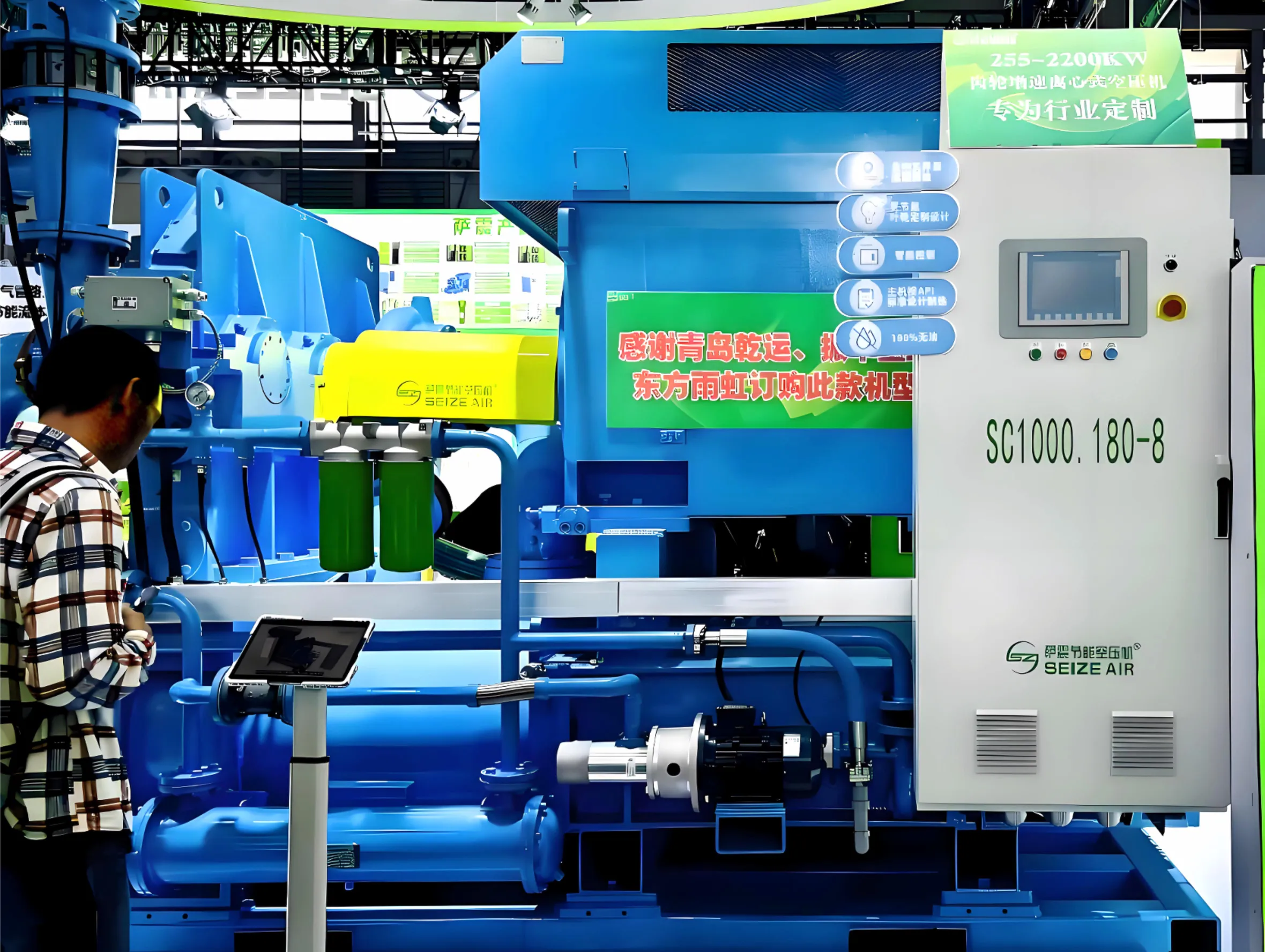
Why Centrifugal Air Compressors Outperform Piston Compressors
1. Higher Energy Efficiency & Lower Operating Costs
Centrifugal compressors use a dynamic compression process, where air is accelerated and converted to pressure using a rotating impeller. This design minimizes energy waste, especially in continuous-duty applications, delivering up to 20–30% higher energy efficiency compared to piston compressors. Piston models, which rely on cyclic motor starts/stops and friction-heavy mechanical parts, consume more power and drive up electricity bills.
2. Reduced Maintenance & Downtime
Piston compressors require frequent maintenance due to wear-prone components like valves, rings, and pistons. In contrast, centrifugal compressors have fewer moving parts, eliminating the need for routine replacements of belts, valves, or seals. This translates to lower maintenance costs and up to 90% less unplanned downtime, ensuring consistent productivity for high-demand industries like manufacturing and petrochemicals.
3. 100% Oil-Free Air Output
Centrifugal compressors often operate without lubricants in the compression chamber, making them ideal for industries requiring clean, contaminant-free air (e.g., food and beverage, pharmaceuticals, electronics). Piston compressors, even “oil-free” models, risk oil carryover due to mechanical wear, compromising air purity and product quality.
4. Greater Capacity for High-Demand Applications
Centrifugal compressors excel in large-scale operations, delivering airflow rates from 500 CFM to over 10,000 CFM with steady pressure. Piston compressors struggle to match this capacity efficiently, as stacking multiple units leads to energy spikes and complex controls. For industries like power generation or automotive manufacturing, centrifugal models offer unmatched scalability.
5. Quieter Operation
Centrifugal compressors generate 75–85 dB noise levels, significantly quieter than piston compressors, which often exceed 95 dB. Reduced noise pollution improves workplace safety and compliance with OSHA standards, while eliminating the need for costly soundproofing setups.
6. Smaller Footprint, Smarter Design
Centrifugal systems feature a compact, vertical design, saving up to 50% more floor space compared to bulky piston compressors. This streamlined layout simplifies installation and integration into existing facilities.
7. Longer Lifespan & ROI
With proper maintenance, centrifugal compressors can operate reliably for 20–30 years, far outpacing the 10–15-year lifespan of piston models. Though the initial investment is higher, the long-term ROI from energy savings, reduced downtime, and durability makes them a cost-effective choice.
Industries That Benefit Most from Centrifugal Compressors
- Oil & Gas: Handles high volumes for refining and pipelines.
- Aerospace: Delivers clean air for precision manufacturing.
- Chemical Processing: Safely compresses corrosive gases.
- HVAC: Powers large-scale climate control systems efficiently.
Conclusion: Is a Centrifugal Compressor Right for Your Business?
While piston compressors may suit small, intermittent tasks, centrifugal compressors are the clear winner for industries prioritizing energy savings, reliability, and scalability. As global standards tighten on energy consumption (e.g., ISO 50001) and emissions, upgrading to centrifugal technology future-proofs your operations.
Ready to optimize your compressed air system? [Contact us] today for a free consultation.
? Phone: +86-15021218862
? Email: sales@seize-air.com


